The power triangle of global influence
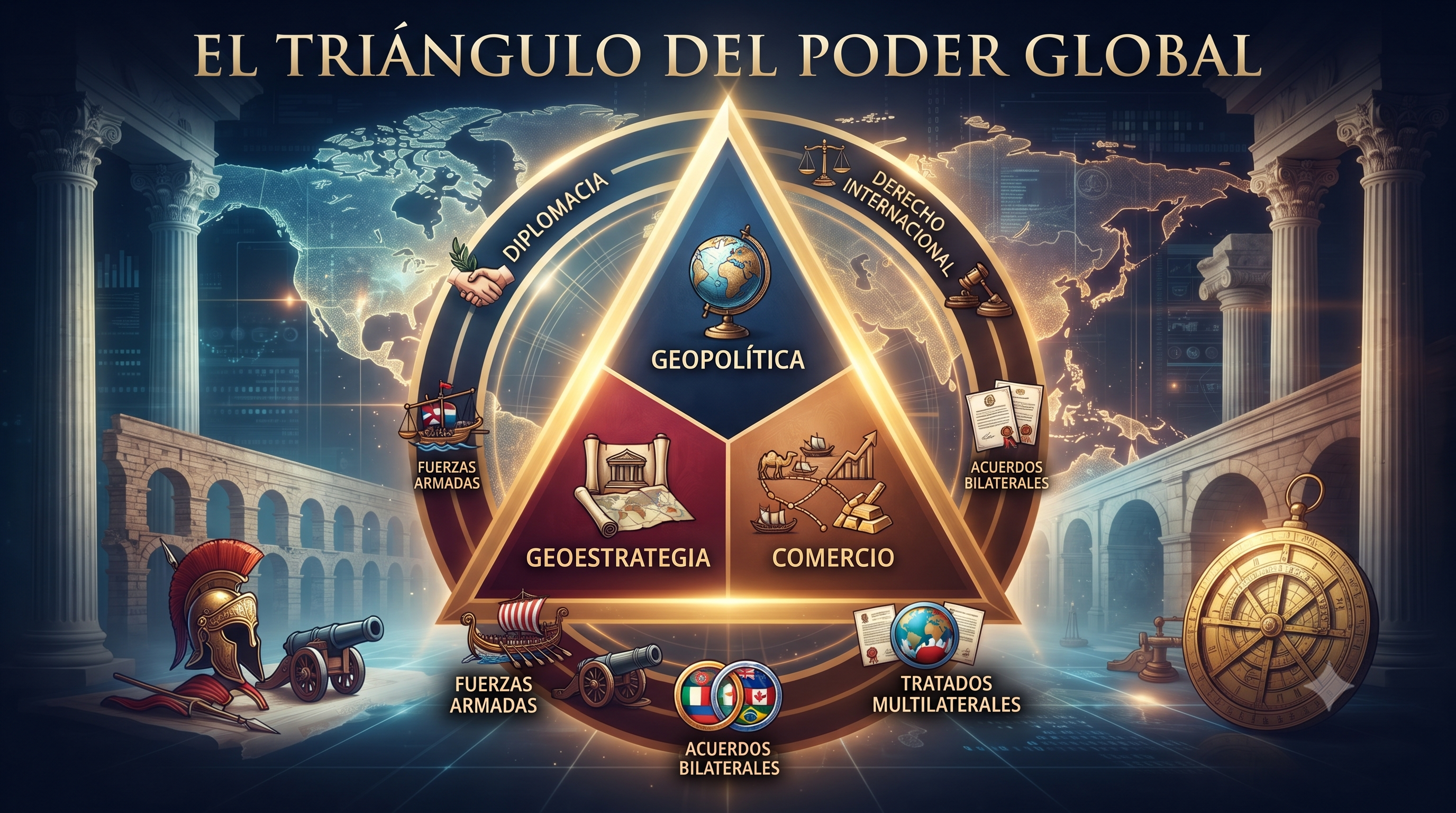
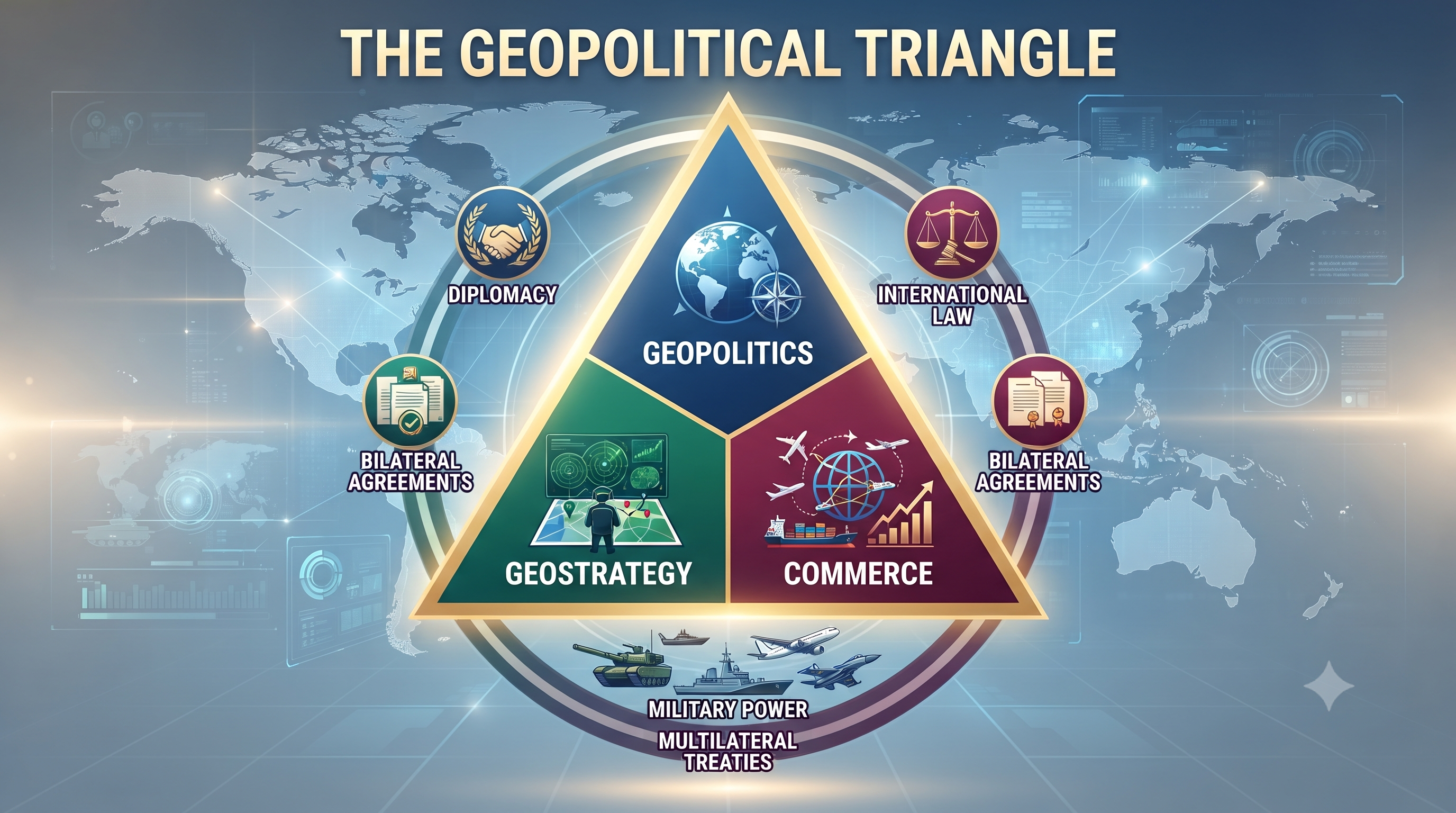
The contemporary world order is not a random set of events, but the result of a constant dynamic between national interests, projection capabilities, and regulatory frameworks. This text analyzes the indissoluble interaction between geopolitics, geostrategy, and commerce, elements that, articulated through diplomacy, international law, and the architecture of security, constitute the axis upon which nations ensure their survival and prosperity. It is fundamental to understand that multinational security alliances in the military, cyber, counter-terrorism, customs, border, and industrial protection fields are intrinsically tied to the capacity for strategic intelligence, the conduct of State policy, and the national objectives outlined by each nation. Without a coherent alignment of these pillars, it is simply impossible to think of nations as developed and in tune with the rhythm of the global village, artificial intelligence, and the general dynamics of the 21st century. Fundamental concepts for understanding the global scenario Geopolitics is defined as the study of the effects of geography, whether human or physical, on international relations and foreign policy. It is an analytical tool that allows us to understand how physical space, resources, and strategic location condition the power of States. Geostrategy is its practical application: the planning and execution of political and military actions aimed at protecting the interests of the State, maximizing advantages, and minimizing vulnerabilities. Commerce is the engine that drives this structure, serving as the primary vehicle for interdependence. International treaties and the various multinational security agreements (in defense, cybersecurity, anti-terrorism, customs control, borders, and protection of industrial assets) act as the legal and operational framework that regulates the functioning of the State in the international system. The effectiveness of these agreements depends directly on the country's strategic intelligence capacity and the strength of its State policy; without clear national objectives, any alliance runs the risk of becoming irrelevant in the face of the complexity of the 21st century. Strategic analysis of the interaction between the pillars of power The correlation between geopolitics, geostrategy, and commerce is direct and bidirectional. Geopolitics defines the board; geostrategy traces the movements, and commerce represents economic vitality. However, the capacity to sustain this triangle depends today more than ever on strategic intelligence and political leadership. Multinational security alliances are not isolated entities; they are instruments that must serve the national objectives outlined by a visionary state leadership. A State that does not integrate its strategic intelligence into the conduct of its alliances (whether military, cyber, or industrial protection) is a blind State. In the era of artificial intelligence and global interconnection, border and customs security depend on shared data and a State vision that understands technology as a strategic asset. A country’s ability to develop is tied to its skill in weaving these security agreements under one premise: the protection of the national interest against hybrid threats. For example, industrial cybersecurity is no longer just a technical matter, but a pillar of national sovereignty that requires ironclad coordination between state intelligence and economic actors.